
GUIDED TROUBLESHOOTING · Observation and technician handoff
Opener clicks or hums but won’t move
Record whether the door, motor and indicators respond. Avoid repeated attempts and get the right kind of help. Start with safety before attempting any checks.
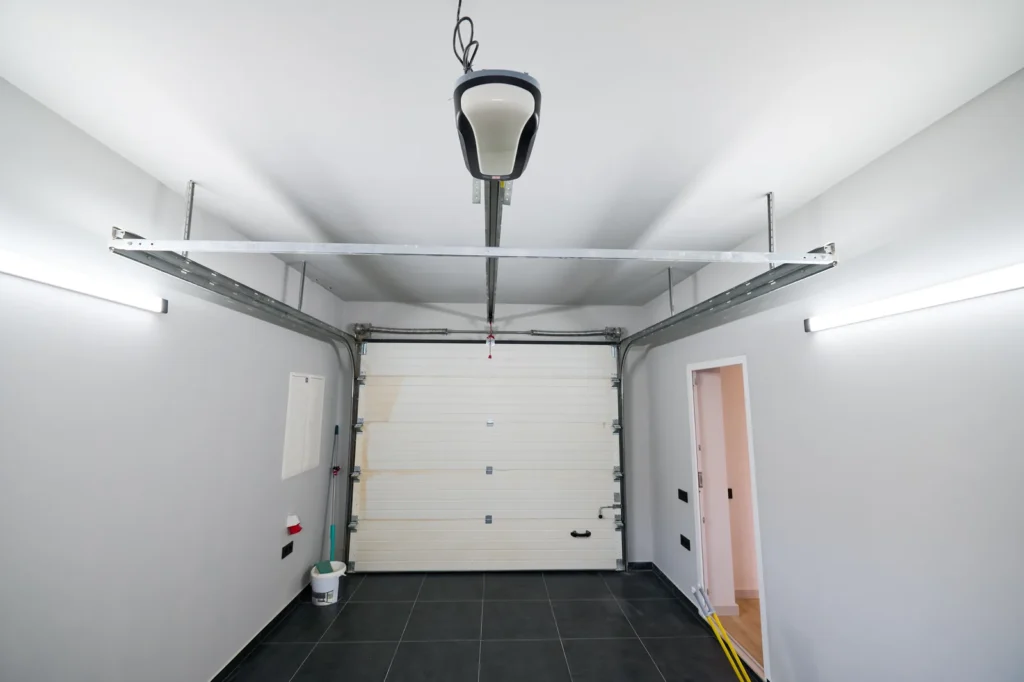
Keep everyone away from a crooked, falling, jammed or damaged door. Do not pull its emergency release, move it by hand, adjust springs or cables, or override safety sensors.
QUICK ANSWER
What to do when the opener clicks or hums but the door does not move
Stop repeated attempts and keep clear of the door. Record whether you heard a brief click, a short hum or a running motor; note the door position and any existing flash or diagnostic code. A lock, spring, door, trolley, drive or internal opener problem can produce similar symptoms. If the motor runs or hums without normal door movement, use the exact model guidance and arrange professional inspection rather than pulling the release or opening the motor housing.
SAFE FIRST CHECKS
Record the symptom without reproducing it.
- Keep people clear and do not operate the opener again merely to hear the sound.
- From a safe distance, note the current door position and any crooked, jammed or visibly damaged condition.
- Write down whether the last response was a click, a brief hum, a longer motor sound or a few inches of movement.
- Record any opener-light flashes, arrow flashes or displayed code without removing a cover.
- Find the exact opener model and tell support or a technician which control was used and whether the symptom occurred while opening or closing.
STOP AND GET HELP
Do not continue if:
- The door is raised, crooked, jammed, unusually heavy or has a suspected spring or cable problem.
- The motor runs, hums repeatedly or the door moves only a few inches.
- There is a burning smell, smoke, heat, sparking or repeated breaker operation.
- Diagnosis would require releasing the door, removing a cover or touching internal electrical or drive components.
Do not pull the release on a raised or unstable door, reconnect or adjust the drive, test a capacitor, open the motor housing or keep cycling the opener.
MATCH THE BEHAVIOR
What the sound and movement can tell you
Clicks or flashes occur only during closing
The safety-sensor or closing system may be involved. Record the pattern and use the closing guide before assuming a motor or circuit-board failure.
The motor hums but the door does not move
A door lock, spring, binding door, trolley or drive issue may be involved. Different drive types have different causes, and a brief hum does not identify the failed part.
The motor runs but the door remains still
A disconnected or failed drive connection is possible. Do not pull or reconnect the emergency release when the door is raised or unstable.
No control produces light, sound or movement
That is a no-response or power path, not just a clicking or humming symptom. Use manufacturer support for safe outlet and control checks.
SOURCES AND NEXT PATHS
Use the exact opener manual.
The meaning of a click, hum or diagnostic code depends on drive type and exact model. Record observations; do not select a replacement part from sound alone.
Reviewed September 27, 2026. This guide organizes safe observations; it does not diagnose a failed part.
INTERACTIVE GUIDE
Walk through the checks one question at a time.
Your answers remain only in this page and can be copied as a summary at the end.
Loading the guide…
If the questions do not appear, use the manufacturer resources alongside this guide or contact a garage-door technician.