
GUIDED TROUBLESHOOTING · Safety sensors and closing
Garage door won’t close
Check the doorway, sensor indicators and the point at which you need professional help. Start with safety before attempting any checks.
Keep everyone away from a crooked, falling, jammed or damaged door. Do not pull its emergency release, move it by hand, adjust springs or cables, or override safety sensors.
QUICK ANSWER
What to check when a garage door won’t close
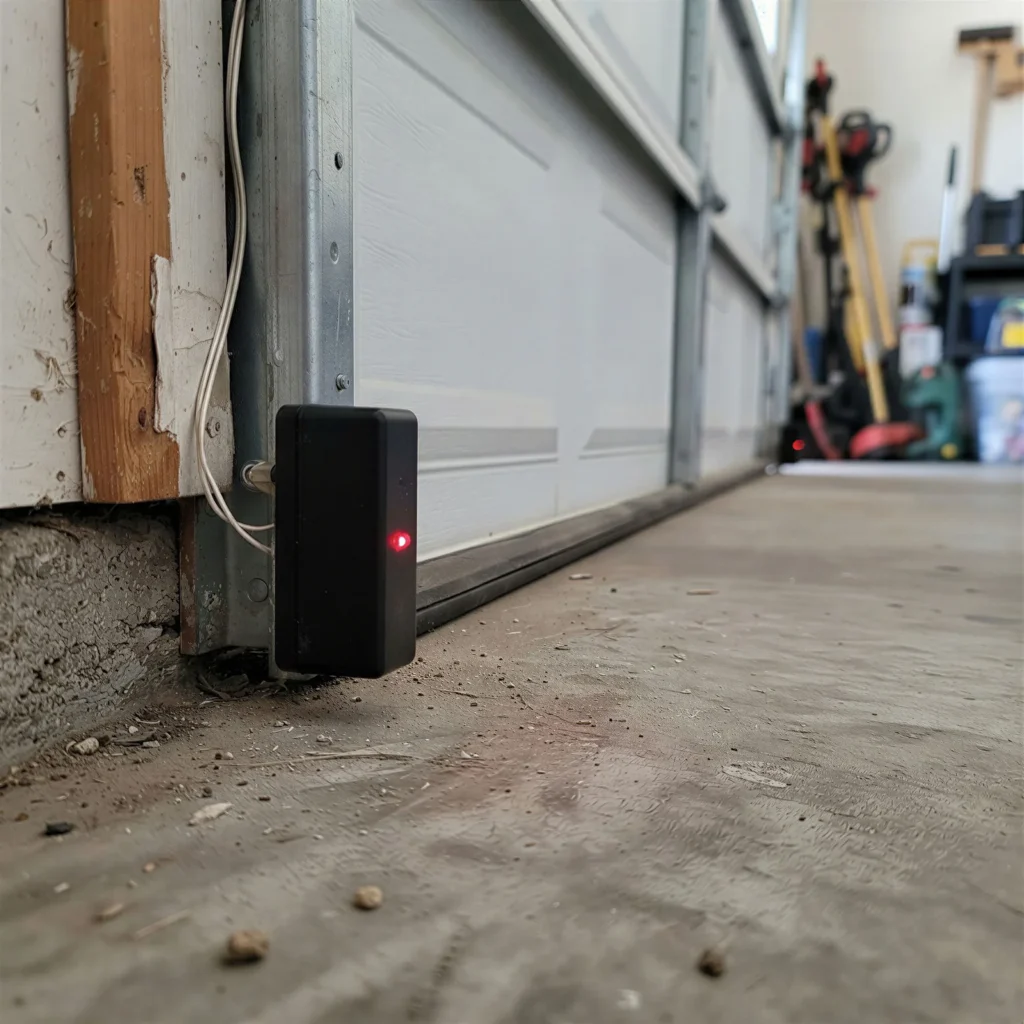
If a stable garage door will not close, first keep everyone clear and inspect the doorway and the invisible beam between the two floor-level safety sensors. Remove only loose debris you can reach safely from the side, gently clean the sensor lenses and compare their lights with the owner’s manual. If the door is crooked, heavy, jammed, damaged or still will not close after one normal attempt, stop and arrange model-specific support or professional inspection.
SAFE FIRST CHECKS
Use observations, not adjustments.
- Look for a crooked door, loose cable, suspected broken spring or anything trapped under the door. Stop immediately if you see one.
- From the side of the opening, clear people, pets and loose objects from the door path and the beam between the sensors.
- Observe both sensor lights. A dark or blinking light is a clue, not proof that a sensor needs replacement.
- Gently wipe a safely reachable lens with a soft, dry cloth. Do not move brackets, handle wiring or bypass the sensors.
- Only when the door is stable, the path is clear and the indicators look normal, make one press-and-release closing attempt while the full doorway remains in view.
STOP AND GET HELP
Do not continue if:
- The door is crooked, falling, unusually heavy, jammed or binding.
- A spring or lifting cable looks broken, loose or damaged.
- The door closes despite an obstructed safety beam, or either required safety test fails.
- The problem remains after the safe observations above, or any check is unclear or inaccessible.
Do not hold a wall button to override the sensors, increase closing force, move sensor brackets, repair wiring or open the motor housing.
MATCH THE BEHAVIOR
What the closing pattern can tell you
The opener light flashes or clicks and the door stays open
A blocked, dirty, misaligned or disconnected safety-sensor system is one possibility. Exact light and diagnostic patterns vary by opener, so record the pattern and use the manual for the complete model number.
The door starts down and reverses before the floor
An obstruction, interrupted sensor beam or unsafe door movement may be involved. Use the reversal guide and do not repeat the movement just to reproduce the symptom.
The door reaches the floor and reverses
Travel settings or a mechanical door problem can look similar. Stop repeated attempts; do not increase closing force or adjust limits by trial and error.
The wall control works but the remote does not
That points to a different path: lock mode, the remote battery, programming or compatibility. Use the remote-not-working guide rather than changing the door or sensors.
SOURCES AND NEXT PATHS
Use the exact opener manual.
Sensor colors, flash counts and diagnostic codes vary by brand, model and production date. The manufacturer’s current instructions take priority.
Reviewed September 27, 2026. This guide organizes safe observations; it does not diagnose a failed part.
INTERACTIVE GUIDE
Walk through the checks one question at a time.
Your answers remain only in this page and can be copied as a summary at the end.
Loading the guide…
If the questions do not appear, use the manufacturer resources alongside this guide or contact a garage-door technician.